
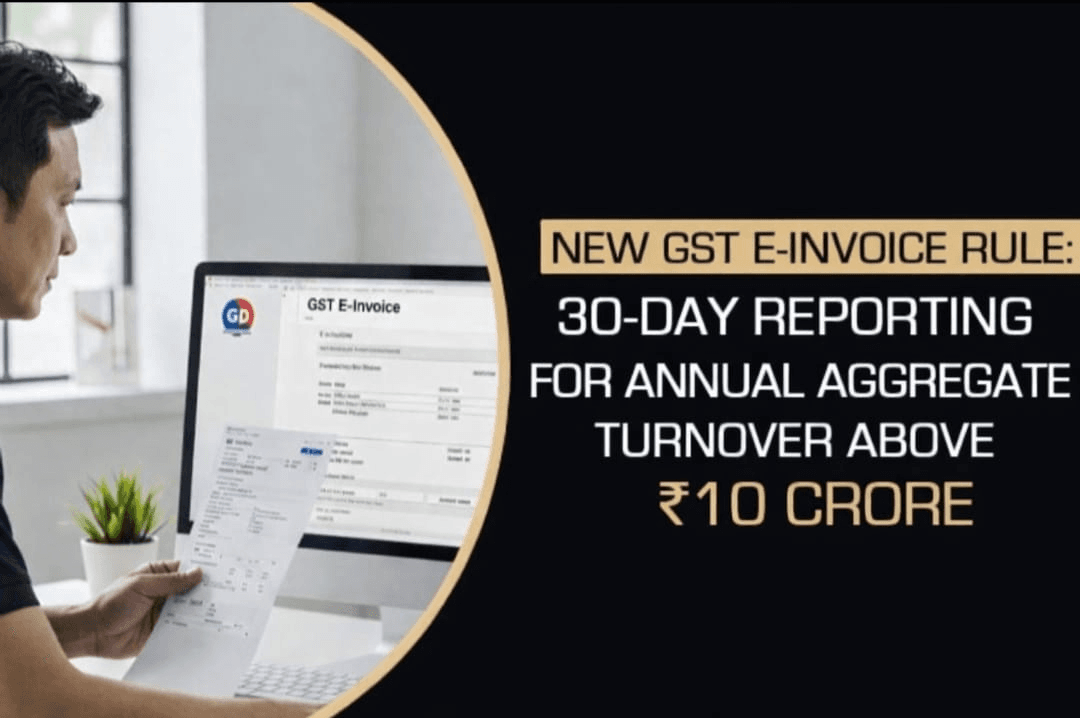
Navigating the New GST E-Invoicing Limits for 2026: A Roadmap for Compliance
Introduction In the world of Indian indirect taxation, the “Paperless Revolution” has reached its final frontier. As of 2026, the Goods and Services Tax (GST) framework has shifted from an optional digital convenience to a mandatory real-time reporting requirement for almost the entire organized sector. The latest lowering of e-invoicing turnover thresholds has brought lakhs […]
Introduction

In the world of Indian indirect taxation, the “Paperless Revolution” has reached its final frontier.
As of 2026, the Goods and Services Tax (GST) framework has shifted from an optional digital convenience to a mandatory real-time reporting requirement for almost the entire organized sector.
The latest lowering of e-invoicing turnover thresholds has brought lakhs of small and medium enterprises (SMEs) into the digital net.
In 2026, compliance is no longer a monthly filing task—it is a live, transaction-by-transaction responsibility.
What are the New E-Invoicing Limits for 2026?
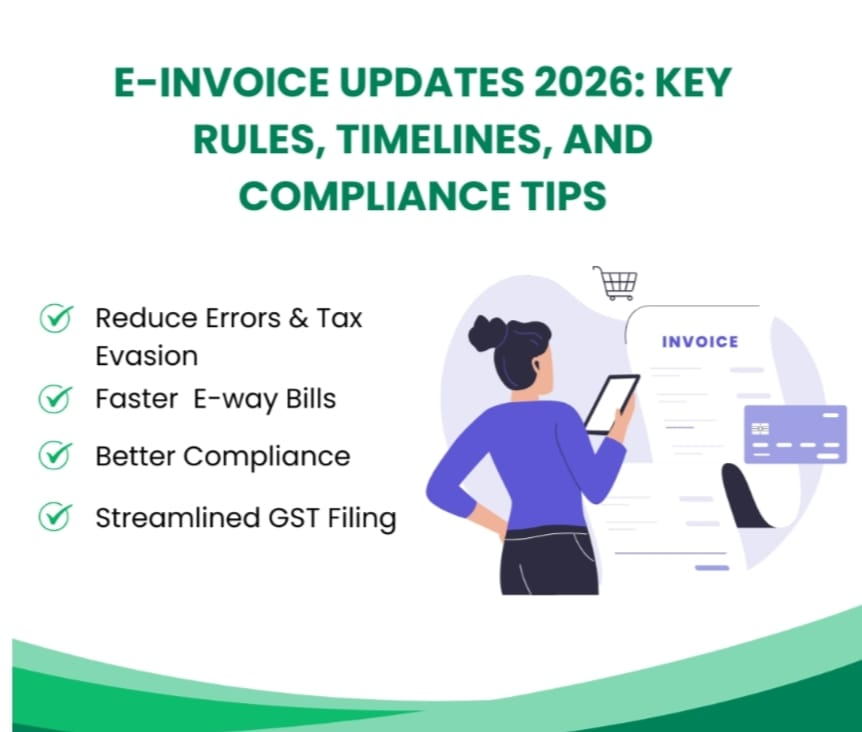
The phased implementation of e-invoicing started in 2020 for large corporations. Since then, the GST Council has systematically lowered this threshold to digitize the supply chain and curb tax evasion.
The 2026 Threshold Shift
Starting in the 2026 fiscal year, any business with an aggregate turnover exceeding ₹2 Crores in any preceding financial year (from 2017-18 onwards) is now mandated to generate e-invoices for all B2B transactions and exports.
Why This Matters for Your Business
- Universal Digitization: This pulls in almost every stable SME and high-growth startup in India.
- Input Tax Credit (ITC): Customers cannot claim ITC unless you provide a valid e-invoice with a unique Invoice Reference Number (IRN).
Understanding the E-Invoicing Workflow

E-invoicing does not mean generating an invoice directly on the GST portal. Instead, invoices are created in your accounting system and reported to the Invoice Registration Portal (IRP).
The Step-by-Step Process
- Generation: Create the invoice in your ERP or accounting software.
- Reporting: Upload the invoice JSON file to the IRP.
- Validation: The IRP validates and generates a unique 64-character IRN and QR Code.
- Auto-Population: Data is pushed to GSTR-1 and the buyer’s GSTR-2B.
The Risks of Non-Compliance
In 2026, the Central Board of Indirect Taxes and Customs (CBIC) has tightened oversight on GST compliance.
- Invalid Invoices: Without an IRN, invoices are not legally valid.
- Heavy Penalties: 100% of tax due or ₹10,000 per invoice (whichever is higher).
- Blocked Logistics: Without e-invoicing, generating an E-Way Bill becomes difficult.
- Loss of Business: Buyers prefer compliant vendors to secure ITC benefits.
How Lawizer Simplifies E-Invoicing
For businesses crossing the ₹2 Crore threshold, technical integration can be complex. Lawizer provides a seamless solution to simplify compliance.
Why Choose Lawizer?
- One-Click IRN Generation: Direct invoice generation from your dashboard.
- Error Validation: AI-based checks prevent GSTIN and HSN errors.
- ITC Reconciliation: Auto-match vendor invoices with purchase records.
- GSTN Integration: Smooth connectivity with the GST network.
Stay compliant and scale your business effortlessly with Lawizer.
Conclusion: Compliance as a Competitive Edge
The 2026 e-invoicing mandate signals a shift toward real-time tax transparency in India.
While initial adaptation may seem complex, benefits like faster ITC claims and reduced audits make it worthwhile.
With expert support from Lawizer, businesses can remain compliant, efficient, and growth-focused.
Frequently Asked Questions
Does the ₹2 Crore limit apply to current turnover?
A: No. It applies if turnover exceeded ₹2 Crores in any previous financial year since 2017-18.
Is e-invoicing required for B2C transactions?
A: No. It is currently mandatory only for B2B, B2G, and export transactions.
Can an e-invoice be canceled?
A: Yes, but only within 24 hours on the IRP. After that, a credit note must be issued.