
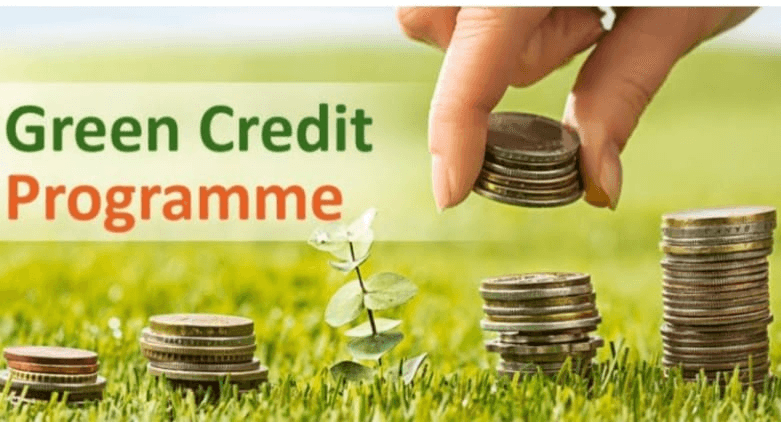
The Rise of Green Credits: New Tax Incentives for India’s Eco-Startups in 2026
Introduction The global shift toward sustainability is no longer a corporate social responsibility (CSR) footnote—it is a core economic driver. In India, the year 2026 marks a defining moment for the Green Economy. With the operationalization of the Green Credit Program (GCP) and new tax incentives introduced in the Union Budget, eco-startups are moving to […]
Introduction

The global shift toward sustainability is no longer a corporate social responsibility (CSR) footnote—it is a core economic driver. In India, the year 2026 marks a defining moment for the Green Economy.
With the operationalization of the Green Credit Program (GCP) and new tax incentives introduced in the Union Budget, eco-startups are moving to the center of institutional investment.
Defining the Green Credit Program (GCP)

Unlike traditional carbon credit systems that focus only on emissions reduction, the Green Credit Rules, 2023 take a broader approach to environmental impact.
Green Credits are awarded for the following activities:
- Tree Plantation: Increasing green cover through afforestation.
- Water Management: Conservation and wastewater treatment.
- Sustainable Agriculture: Promoting organic farming and land restoration.
- Waste Management: Recycling initiatives and circular economy models.
How the Ecosystem Functions
The system is administered by the Indian Council of Forestry Research and Education (ICFRE).
Startups must register projects on the Green Credit Portal and undergo verification before credits are issued.
Tax Incentives: The 2026 Fiscal Push

The Union Budget 2026 introduces strong financial incentives to support green businesses.
Section 80-IBA Extension for Green Housing
Startups working on green buildings certified by the Bureau of Energy Efficiency (BEE) can claim extended tax benefits.
This includes eligibility for 100% profit deductions for sustainable infrastructure projects.
Accelerated Depreciation on Green Technology
Under the Income Tax Act, eco-startups can claim up to 40% accelerated depreciation on green equipment.
Angel Tax Exemptions
Investments in DPIIT-recognized startups focused on climate solutions are exempt from Angel Tax if used for green capital expenditure.
The Tradability of Impact: ESG and Green Credits
Demand for Green Credits is driven by large listed companies in India.
Under the SEBI BRSR framework, companies must disclose environmental performance.
- Marketplace: Startups can sell Green Credits to corporations.
- Revenue Stream: Provides additional and stable income.
- Compliance Tracking: Monitor disclosures via the Ministry of Corporate Affairs.
Navigating the Regulatory Framework
To qualify for Green Credits and incentives, startups must comply with strict regulations.
- Verification: Conducted by the Central Pollution Control Board (CPCB) and auditors.
- Digital Tracking: Credits are digitally recorded to prevent misuse.
- FEMA Compliance: Required for foreign funding under RBI guidelines.
Challenges in the Green Credit Market
Despite growth, eco-startups face key challenges:
- Price Volatility: Credit values fluctuate based on demand.
- Verification Delays: Credit issuance may take 6–12 months.
The Future of Green Credits
The government is working on integrating Green Credits with global carbon markets.
Under Article 6 of the Paris Agreement, startups may soon convert Green Credits into Carbon Credits for international trade.
Strategic Checklist for Eco-Founders

- DPIIT Recognition: Register on Startup India.
- BEE Certification: Obtain energy efficiency certifications.
- Audit Trail: Maintain digital environmental records.
How Lawizer Powers Your Green Startup
Managing environmental compliance and tax regulations can be complex. Lawizer simplifies this process through advanced legal-tech solutions.
It helps automate registration, manage documentation, and track compliance requirements across multiple government frameworks.
Why Choose Lawizer?
- Automated Compliance: Reduces manual effort.
- Regulatory Tracking: Stay updated with policy changes.
- Documentation Support: Ensure accuracy and compliance.
- Centralized Dashboard: Manage everything in one place.
Build a sustainable business with confidence using Lawizer.
Conclusion: Scalability Through Sustainability
Green Credits are emerging as a key asset in India’s startup ecosystem.
The future belongs to businesses that not only generate profits but also contribute to environmental restoration.
Frequently Asked Questions
What is the difference between Carbon Credits and Green Credits?
A: Carbon Credits focus on emission reduction, while Green Credits reward broader environmental actions like water conservation and waste management.
Can startups claim both tax benefits and Green Credits?
A: Yes. Startups can earn Green Credits while also claiming tax incentives under relevant provisions.
How can Green Credits be monetized?
A: Verified credits can be sold to corporations that need them for ESG compliance.
Are eco-startups exempt from Angel Tax?
A: Yes, DPIIT-recognized startups working on green initiatives are generally exempt.
What are FEMA requirements for green funding?
A: Foreign investments must comply with RBI guidelines, including rules for external borrowings.
Who verifies environmental impact?
A: Agencies like CPCB and authorized auditors verify environmental claims.