Business Licenses Every Startup Needs
Business Licenses Every Startup Needs in India Business licence and compliance checklist for Indian startups. Starting a business in India involves more than registering a company and opening a bank account. The business licenses every startup needs depend on the business structure, industry, location, turnover, employees and activities of the startup. A food business, SaaS […]
Business Licenses Every Startup Needs in India

Starting a business in India involves more than registering a company and opening a bank account. The business licenses every startup needs depend on the business structure, industry, location, turnover, employees and activities of the startup. A food business, SaaS company, manufacturer and online retailer can have very different legal requirements.
There is also an important distinction between a business registration, tax registration, licence and permit. Incorporating a Private Limited Company, for example, does not automatically give the company permission to carry out every regulated activity. Similarly, GST registration is a tax registration, while an FSSAI licence is relevant to food businesses.
This guide explains the main registrations, licences and approvals Indian founders should evaluate before launching. It also covers industry-specific permissions, online businesses, MSME registration, Startup India, trademark protection and ongoing compliance.
What Are the Business Licenses Every Startup Needs?
There is no single licence package that applies to every Indian startup. The correct checklist depends on what the business does and where it operates.
Most founders should review these categories:
- Business or entity registration
- PAN and TAN requirements
- GST registration, where applicable
- MSME Udyam registration
- Shops and Establishments requirements
- Local trade licences and municipal permissions
- Industry-specific licences
- Import and export registrations
- Employment and labour registrations
- Intellectual property protection
Not every item on this list is mandatory for every startup. The goal is to identify which requirements apply to your specific business before you begin commercial operations.
Business Registration Is the First Legal Step
Before asking which licence you need, decide how the business will be structured. Common options include a sole proprietorship, partnership firm, LLP, One Person Company and Private Limited Company.
Private Limited Company
A Private Limited Company is commonly considered by startups planning to raise equity investment, issue shares or build a scalable corporate structure. It is a separate legal entity and offers limited liability, subject to applicable law.
Founders can review Lawizer’s Private Limited Company registration service when evaluating this structure.
Limited Liability Partnership
An LLP combines partnership-style flexibility with limited liability protection. It can be suitable for professional firms, service businesses and founders who do not need the conventional share structure of a company.
See Lawizer’s LLP registration service for more information.
One Person Company
An OPC can be considered by an eligible solo entrepreneur who wants a corporate structure with a single member. The suitability of an OPC depends on the founder’s plans, compliance requirements and future growth.
Lawizer also provides One Person Company registration assistance.
GST Registration: One of the Most Important Startup Tax Registrations
GST is not a general business licence. It is a tax registration that becomes relevant when the business falls within the registration requirements under GST law.
For many businesses, the commonly applicable threshold is based on aggregate turnover, with different thresholds and exceptions depending on the nature of supply, state and applicable notifications. Certain categories can also have registration obligations regardless of ordinary turnover thresholds.
Therefore, founders should not assume that incorporation automatically means GST registration is mandatory. They should assess turnover, taxable supplies, location and the nature of their transactions.
Lawizer’s GST registration service can help founders organise the registration process.
For a deeper explanation, read GST Registration for Startups: Who Needs It and How to Apply.
When Should a Startup Check GST Registration?
- When turnover approaches the applicable registration threshold.
- When the business makes transactions that trigger compulsory registration.
- When the business model involves e-commerce or other specified categories.
- When the startup begins making taxable supplies in circumstances where registration is required.
- When the founder wants to evaluate voluntary registration for commercial reasons.
GST rules can change through legislation, notifications and government decisions. Always check the current position before relying on a particular threshold.
MSME Udyam Registration for Eligible Startups and Small Businesses
Udyam registration is different from incorporation and GST registration. It is the government’s MSME registration mechanism for eligible enterprises.
It is generally not a universal licence required before every startup can begin operations. However, eligible businesses may find Udyam registration useful for accessing schemes, credit-related benefits, government procurement opportunities and protections available under the MSME framework.
The official Udyam portal states that registration is free and does not require renewal. The current MSME classification is based on investment and turnover criteria, so founders should check the latest government thresholds before applying.
You can also review Lawizer’s MSME Udyam registration service.
For more detail, read Udyam Registration: MSME Benefits, Eligibility & How to Apply Online.
Shops and Establishments Registration
State-specific Shops and Establishments laws can impose registration, working-condition and record-keeping requirements on certain commercial establishments. The exact rules differ from one state to another.
A startup operating from a physical office, shop, commercial establishment or similar premises should therefore check the law applicable in its state.
This is particularly important for founders who assume that company incorporation automatically covers local establishment requirements. It usually does not.
Do Startups Need a Local Trade Licence?
A local trade licence may be required by the relevant municipal or local authority depending on the business activity and premises. The requirement is therefore not identical across India.
Restaurants, shops, workshops, manufacturing units and other establishments may face different local requirements. The location of the premises can also affect which authority is responsible.
Before signing a long-term commercial lease, founders should check whether their intended business activity is permitted at the premises and whether additional local permissions are required.
Industry-Specific Business Licences Every Startup Needs to Check
The most important lesson for founders is that regulated industries can require additional licences beyond normal business registration and tax formalities.
FSSAI Registration or Licence for Food Businesses
Food businesses are regulated by the Food Safety and Standards Authority of India. Food Business Operators generally need the appropriate FSSAI registration or licence for their activity.
This can affect restaurants, cloud kitchens, food manufacturers, processors, distributors, retailers and other food-related businesses.
The exact category depends on factors such as the nature and scale of the food business. Founders should therefore check the applicable FSSAI category rather than choosing a licence solely based on the business name.
Importer Exporter Code for Import and Export
Businesses involved in import or export activities should assess whether they require an Importer Exporter Code, commonly called an IEC.
DGFT rules generally require an IEC for undertaking import or export activities, subject to applicable exemptions. The IEC process is separate from ordinary company incorporation.
This matters for manufacturers buying components from overseas, exporters selling Indian products abroad and businesses that regularly conduct cross-border trade.
Environmental and Pollution-Control Approvals
Manufacturing, processing, construction and other activities may require permissions from the relevant pollution-control or environmental authorities.
The requirements can depend on the industry, location, scale and environmental impact. A startup should identify these requirements before establishing a factory or production facility.
Fire Safety Approvals
Certain commercial premises may require fire-safety approvals or a Fire NOC depending on local rules, building use, occupancy and other factors.
Do not assume that the landlord’s existing approval automatically covers your particular business activity. Confirm the position with the relevant local authority.
Legal Metrology Requirements
Businesses selling packaged products may need to consider Legal Metrology requirements relating to declarations, quantities, weights, measures and packaged commodities.
This can be particularly relevant to D2C brands, manufacturers, importers and e-commerce sellers.
Sector-Specific Financial, Healthcare and Other Licences
Some sectors have dedicated regulators and licensing frameworks. Financial services, healthcare, pharmaceuticals, education, insurance, telecom and other regulated industries can require approvals beyond the standard startup checklist.
For such businesses, founders should conduct a sector-specific legal review before accepting customers or launching the regulated service.
What Licences Does an Online Startup Need?
An online business is not automatically exempt from regulatory requirements. The internet changes the delivery channel, but it does not necessarily remove the underlying legal obligations.
For example, an online food business may still need FSSAI compliance. An e-commerce seller may need to assess GST, consumer protection and Legal Metrology requirements. An online business handling personal data should also review its privacy and data-protection obligations.
Lawizer provides Privacy Policy and Terms of Use documentation for businesses that need appropriate website or application documents.
Online startups should also consider trademark registration before investing heavily in a brand.
Trademark Registration Is Not a Business Licence
A trademark is not a licence to operate a business. Instead, trademark registration protects a brand identifier such as a name, logo or other distinctive mark, subject to the applicable legal requirements.
Registering a trademark can help a startup protect the identity it is building. It can also become an important business asset when the company expands, raises investment or licenses its brand.
Lawizer’s Trademark Registration service can assist founders with the filing process.
You can also read Trademark Registration in India: A No-Jargon Guide for First-Time Founders.
Startup India Registration: Is It Mandatory?
DPIIT recognition under the Startup India initiative is not the same as incorporating a business. It is also not a universal licence that every startup must obtain before operating.
Eligible startups can consider DPIIT recognition to access benefits available under the Startup India framework, subject to the relevant eligibility conditions and separate requirements for individual benefits.
Founders interested in recognition can review Lawizer’s Startup India registration assistance.
What Are the Business Licenses Every Startup Needs Before Launch?
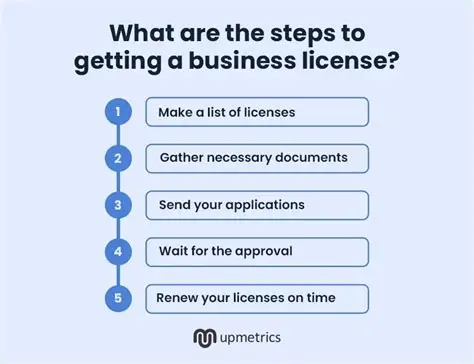
A practical pre-launch checklist can help founders avoid missing an important requirement.
- Choose the appropriate business structure.
- Complete company, LLP or other applicable registration.
- Obtain or confirm PAN and TAN requirements.
- Check GST applicability.
- Evaluate Udyam registration if eligible.
- Check Shops and Establishments requirements.
- Check local trade licence requirements.
- Identify industry-specific licences.
- Check import/export requirements if relevant.
- Review employee and labour-law registrations when hiring.
- Protect the brand through trademark registration.
- Prepare appropriate customer, vendor and founder contracts.
- Set up a system for recurring tax and corporate compliance.
Business Licences vs Registrations vs Permits
These terms are often used interchangeably, but they can serve different purposes.
Registration
A registration records a business, taxpayer or enterprise with the relevant authority. Company incorporation and Udyam registration are examples of different types of registration.
Licence
A licence generally gives permission to conduct a regulated activity subject to specified conditions. Food businesses are a common example.
Permit or NOC
A permit or No Objection Certificate may relate to a particular activity, premises, safety requirement or local approval.
This distinction matters because obtaining one registration does not automatically satisfy every other regulatory requirement.
What Happens If a Startup Operates Without a Required Licence?
The consequences depend on the specific law and the nature of the violation. Possible consequences can include notices, monetary penalties, suspension of operations, cancellation of a registration, difficulty continuing the regulated activity and, in serious cases, prosecution.
There can also be commercial consequences. Investors may identify compliance gaps during due diligence. Customers may ask for regulatory certificates. Banks, marketplaces or enterprise clients may require evidence of registration before onboarding the business.
That is why compliance should be treated as part of business planning rather than as paperwork to complete after launch.
How to Identify the Right Licence Checklist for Your Startup
Step 1: Identify the Business Activity
Start with what you actually sell or provide. A software company, restaurant, manufacturer, consultant and pharmaceutical distributor should not use the same checklist.
Step 2: Identify the Business Structure
Determine whether you will operate as a proprietorship, partnership, LLP, OPC or company. The structure affects registration and continuing compliance.
Step 3: Check Your State and Location
Review state and municipal requirements for the location where the business operates. This is especially important for physical premises.
Step 4: Check Tax Obligations
Assess GST, TDS, income-tax and other applicable obligations. Tax registrations depend on the nature of the business and transactions.
Step 5: Check Sector Regulations
Ask whether your industry has a dedicated regulator. If yes, identify its registration, licence and reporting requirements before launch.
Step 6: Review Ongoing Compliance
Some registrations are only the beginning. Companies and LLPs have recurring filing obligations, while tax and sector-specific registrations can involve regular returns, renewals or updates.
Lawizer’s annual compliance services can help businesses organise recurring corporate compliance.
What Are the 7 Stages of a Startup?
The commonly discussed seven stages are:
- Ideation
- Validation
- Business formation
- Launch
- Early growth
- Scaling
- Maturity, acquisition or exit
Legal requirements can change as the startup moves through these stages. A founder may need only basic registrations initially but later require employment, intellectual-property, fundraising, data, sector or corporate compliance support.
What Are the 7 Types of Business With Examples?
There is no single statutory list of exactly seven business types. For practical purposes, businesses can be grouped into categories such as:
- Retail: shops selling products directly to consumers.
- Wholesale: businesses supplying products to other businesses.
- Manufacturing: businesses producing physical goods.
- Services: consultants, agencies and professional firms.
- E-commerce: businesses selling through digital channels.
- Technology/SaaS: software and technology platforms.
- Import/export: businesses involved in international trade.
The type of business often determines which regulatory requirements need to be investigated.
What Are the 7 Main Points in a Business Plan?
A practical business plan can include:
- Executive summary
- Business description
- Market analysis
- Products or services
- Marketing and sales strategy
- Operations and management plan
- Financial plan
Founders should include legal and compliance costs in the operations and financial sections. This helps prevent unexpected expenses after launch.
Frequently Asked Questions About Business Licences
What are all the licences required to start a business in India?
There is no universal list. Requirements depend on the business structure, state, location, turnover, employees and industry. Common areas include entity registration, GST where applicable, local registrations and industry-specific licences.
What are the 10 types of business?
There is no universal legal list of ten types. Common categories include retail, wholesale, manufacturing, services, e-commerce, technology, professional services, franchising, import/export and subscription businesses.
What are the three types of licensing?
There is no universal legal classification of exactly three types. In business discussions, licensing can refer to government or regulatory licences, intellectual-property licensing and commercial licensing arrangements.
How many types of licences are there?
There is no fixed number applicable to every Indian business. Licences can be created under central, state and local laws and can vary by industry and activity.
What is the CC BY 4.0 licence?
CC BY 4.0 is a Creative Commons licence that generally allows others to share and adapt licensed material, including for commercial purposes, provided they follow the licence conditions and give appropriate attribution.
Is CC BY 4.0 free for commercial use?
Generally, yes. CC BY 4.0 permits commercial use, subject to its attribution and other licence conditions. Always check that the material is actually offered under CC BY 4.0 and that third-party rights do not create additional restrictions.
What are the six types of Creative Commons licences?
The six main Creative Commons licences are CC BY, CC BY-SA, CC BY-ND, CC BY-NC, CC BY-NC-SA and CC BY-NC-ND. Their differences mainly concern attribution, commercial use and whether adaptations can be shared under the same or modified terms.
What is the 80/20 rule for startups?
The 80/20 rule, or Pareto principle, is a business-management concept rather than a startup law. It suggests that a relatively small number of inputs can produce a large share of results. Founders can use it to identify their most valuable customers, products and activities.
Why do 90% of startups fail?
The claim that 90% of startups fail should not be treated as a universal Indian statistic. Startup failure varies by industry, dataset and definition. Common risks include poor product-market fit, cash-flow problems, weak unit economics, founder disputes and regulatory failures.
What business is easiest to start?
Service businesses can often have lower initial capital requirements than manufacturing or inventory-heavy businesses. However, the easiest business depends on your skills, capital, customers, location and applicable regulations.
What business has a 90% success rate?
No general business category can reliably guarantee a 90% success rate. Business success depends on execution, demand, capital, competition, management and many other factors.
What business will boom in 2026?
Areas attracting attention include technology-enabled services, AI-related solutions, digital commerce, specialised professional services and businesses supporting India’s expanding digital economy. However, no sector is guaranteed to boom, so founders should validate actual customer demand.
Who are Gen Z entrepreneurs?
Gen Z entrepreneurs are founders from Generation Z who build businesses using approaches shaped by digital platforms, social media, online communities and technology. Their businesses can range from creator-led brands to software, e-commerce and professional services.
How can I earn ₹2 lakh per month in business?
Start by separating revenue from profit. To earn ₹2 lakh in monthly profit, calculate your expected gross margin, operating costs, customer acquisition costs and required sales volume. Then work backwards to determine how many customers or transactions you need.
What are the 7 pillars of business?
A useful seven-pillar framework is strategy, finance, operations, marketing, sales, people and legal/compliance. The exact framework varies, but these areas cover most of the core functions required to build a sustainable business.
What are the 12 components of a business plan?
A detailed business plan may include an executive summary, company description, problem and solution, market analysis, customer profile, competitive analysis, business model, marketing strategy, operations, management, financial projections and funding requirements.
What are the 10 types of business plans?
Common formats include startup plans, traditional plans, lean plans, strategic plans, operational plans, growth plans, expansion plans, feasibility plans, internal plans and contingency plans. The right format depends on the purpose of the document.
What are the 7 key elements of a business plan?
The seven key elements can be summarised as the executive summary, business description, market analysis, product or service strategy, marketing and sales plan, operations and management plan, and financial projections.
Business Licences Every Startup Needs: Final Checklist
Before launching, do not ask only whether your company is incorporated. Ask whether the business is legally ready to perform the specific activities it plans to undertake.
- Choose the right business structure.
- Complete the applicable business registration.
- Confirm PAN and TAN requirements.
- Check GST registration requirements.
- Evaluate Udyam registration.
- Check state Shops and Establishments requirements.
- Check local trade licences.
- Identify sector-specific licences.
- Review FSSAI requirements if you operate a food business.
- Check IEC requirements for import/export activities.
- Review environmental, fire-safety and Legal Metrology requirements where relevant.
- Protect your brand with trademark registration.
- Prepare appropriate contracts and online business documents.
- Set up a system for ongoing compliance and renewals.
Get Help With Your Startup Compliance Checklist
The right legal checklist depends on your business activity, structure, state, location and growth plans. A startup should therefore avoid copying another company’s licence list without checking whether the same rules actually apply.
Lawizer helps Indian founders with company registration, LLP registration, GST registration, MSME Udyam registration, trademark registration, Startup India registration and ongoing annual compliance.
If you are unsure which registrations, licences or permits apply to your startup, consult a qualified legal, tax or compliance professional before launching the regulated part of your business. Getting the checklist right early can help you avoid preventable penalties, delays and compliance gaps later.
Ready to organise your startup’s legal setup? Explore Lawizer’s startup and business legal services and build a compliance checklist based on your actual business model.